Soundproofing

Do Soundproof Curtains Really Work? A Beginner’s Guide to Decibels and Fabric Density
Soundproof curtains work, but not in the way the product photos suggest. Hung properly, a heavy, densely woven curtain takes the hard edge off street noise, soaks up the echo that makes a living room feel like a tiled bathroom, and makes a bedroom easier to fall asleep in. What it will not do is turn a flat on a bus route into a library. Understanding that gap between marketing and physics is the whole point of this guide, and it is the difference between spending money well and being disappointed. Two things decide the result: how loud the noise is in decibels, and how much mass you put in its way.
Absorbing Sound and Blocking Sound Are Different Jobs
Acoustic products generally do one of two things. They absorb sound that is already in the room, turning some of it into a tiny amount of heat as it moves through soft fibres. Or they block sound from passing through, which requires mass, airtightness and, ideally, separation between layers.
A curtain does both, but it is far better at the first. Hang a heavy curtain across a bare window in a room with hard floors and the change is obvious within a second: voices stop bouncing, the television stops sounding brittle. That is absorption at work, and it is genuinely valuable.
Blocking is harder. Noise from the street has to be stopped from coming through the glass, the frame, the trickle vents and the wall around them. A curtain adds one more layer to that sandwich. It helps, sometimes by a few decibels, but a curtain is measured in grams per square metre, not in tonnes.
So treat "soundproof curtains" as shorthand for "noise-reducing curtains". The honest sellers use exactly that language. The ones promising total silence usually do not.
Decibels, Without the Maths Degree
The decibel scale is logarithmic, which is a formal way of saying small numbers are bigger than they look. A handy set of reference points:
- A quiet bedroom at night: around 30 dB
- Normal conversation or a humming fridge: around 50–60 dB
- A busy street, a vacuum cleaner, a motorway a few streets away: around 70–80 dB
- A lively restaurant or a loud television: around 85 dB
For most listeners, an increase of about 10 dB sounds roughly twice as loud, and a cut of about 10 dB sounds about half as loud. That puts the real-world performance of a good acoustic curtain in perspective. A 5 dB reduction is worth having: it is often the difference between "that is annoying" and "I can ignore that". A 10 dB reduction is the point where people describe a room as noticeably quieter. Any claim of 30 dB from fabric alone deserves a raised eyebrow unless it comes with a test report for a specific window and a specific installation.
Frequency matters just as much. High-pitched sounds such as tyre hiss, birdsong and cutlery clatter are relatively easy to soften. Low rumbles and bass notes pass through fabric almost as if it were not there.
Fabric Density: The Number That Matters Most
Curtain weight is usually stated in grams per square metre. Decorative drapes often sit around 150–300 g/m², blackout and standard acoustic curtains around 350–600 g/m², and heavier barrier products above that, often with a mass-loaded vinyl layer sewn inside.
There is a rough rule of thumb in acoustics called the mass law: each doubling of surface mass adds something in the region of 6 dB of transmission loss, in ideal laboratory conditions with a perfectly sealed sample. In a real bedroom window with gaps and a radiator underneath, expect less. The principle still holds, though. Doubling the weight of the fabric is the single most effective upgrade you can make, short of rebuilding the window.
What to look for on the label
- 400 g/m² or more if blocking noise is the goal, not just darkening the room.
- A separate mass layer rather than a single thin sheet with a fancy name.
- Fullness allowance of one and a half to two times the window width, so the folds create multiple layers.
- A stated acoustic figure with test conditions, not just a large number in the marketing copy.
Thickness is not the same as density. A fat foam-backed curtain absorbs beautifully but blocks very little. Mass blocks; loft absorbs. Good products do a bit of both.
Where Soundproof Curtains Give Up
Low frequency noise is the honest limit. If you can feel the bass from a neighbour's sound system in your chest, or the rumble of a lorry vibrates the window frame, fabric will only take the edge off. Those problems need mass and separation: secondary glazing, a window insert, laminated glass, or work on the structure itself.
Gaps are the other limit, and they are the one people overlook. Sound behaves a little like water. A three-millimetre gap along the top of a curtain gives noise a shortcut, and that shortcut can undermine the whole purchase. Trickle vents, letterboxes, keyholes and the gap under a door all leak sound too. Sealing a window frame with proper draught strip often does more for a room than adding another kilogram of fabric.
How to Hang a Curtain So It Actually Performs
- Go wider and longer than the window. Aim for 15–20 cm past each side and down to the floor or sill, so sound cannot slip around the edges.
- Mount the track close to the window and as near to the wall as the fabric allows. A rod that projects 20 cm into the room leaves a gap for sound to travel behind.
- Buy generous width. One and a half to two times the window width gives deep folds, which trap air and add effective layers.
- Seal the leading edges. Magnetic tape, hook-and-loop strips or a side channel are cheap and make a noticeable difference. This is the most underrated step on the list.
- Deal with the other leaks first. Draught-proof the frame, block the vents when they are not needed, and use a draught excluder at the door.
- Consider two layers. A heavy outer curtain plus a separate liner, or a curtain combined with a removable window insert, outperforms one very thick panel.
- Keep the fabric free. Do not pin it behind a sofa or a radiator, and shake out dust occasionally, since a clogged pile absorbs less.
Matching the Curtain to the Noise You Actually Have
- General street noise and traffic hiss: a pleated curtain of 400–600 g/m² with sealed edges and full coverage will usually take a useful edge off.
- Neighbours' voices or television: absorption helps here, so add soft furnishings as well as the curtain.
- Bass, machinery and heavy traffic rumble: curtains will only soften it. Budget for secondary glazing or an acoustic window insert if the problem is serious.
- Echo in a hard, empty room: almost any decent heavy curtain helps, and covering more wall area beats buying a heavier single panel.
A Practical Place to Start
Pick the one window that bothers you most. Measure it properly, order a single heavy curtain at 400 g/m² or above in a generous width, and hang it on a track close to the frame with the edges sealed. Live with it for a week before you buy anything else. Most people find that this one step removes the sharpest part of the noise and makes the room feel calmer, even though the decibel meter has barely moved.
Then decide whether you need more. If the residual noise is a low rumble, spend the next money on the window itself rather than on more fabric. If it is echo and everyday clatter, a second curtain in the hallway or a rug on the floor may do more than a thicker panel. And if noise is genuinely wrecking your sleep, treat curtains as one part of the answer: earplugs, a white-noise source, and a conversation with an acoustic specialist or your doctor are all reasonable next steps.
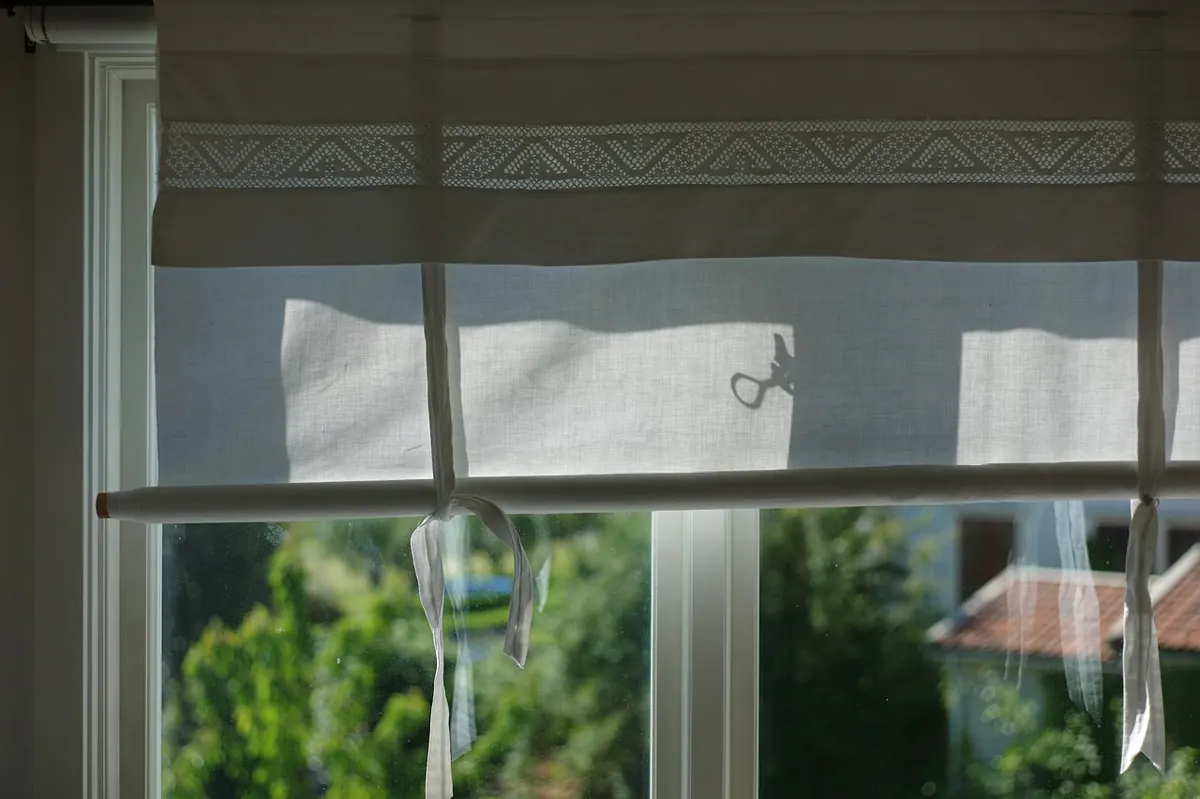
Photo: Sinan KRIYA / Pexels
Related Articles